FAO, partners launch Agri-accelerator 2.0 to strengthen youth agribusiness
By Aminata Kuyateh
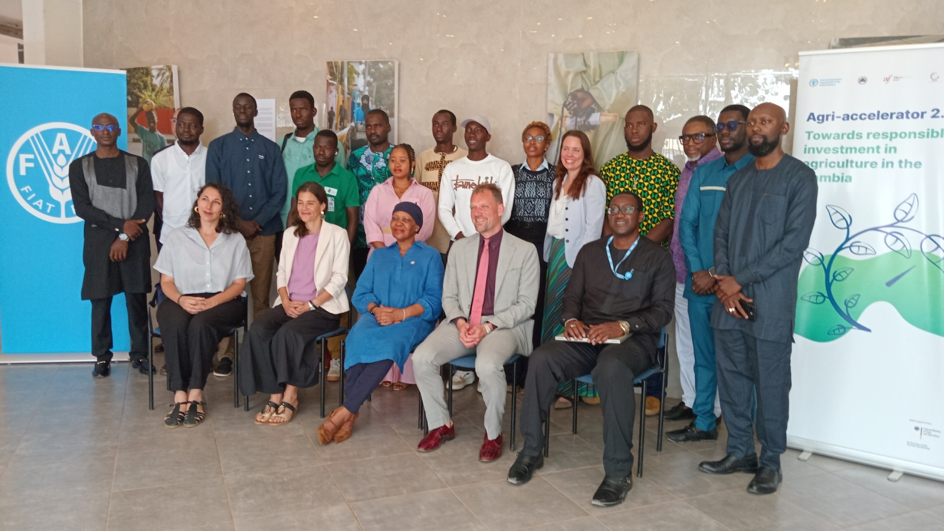
The Food and Agriculture Organisation, through GambiaTech and support from Germany Embassy Monday launched Phase 2 of the Four days Agri-Accelerator Hub Gambia programme held at Alliance Française, to equip young agripreneurs with coaching, investment readiness and business development skills.
Running from April to June, the programme targets Gambians aged 18 to 35 already active in agriculture, offering free personalised coaching, mentorship, and business tools to help them build sustainable enterprises.
Alliance Française Director Marion Ray-Essien said the initiative reflects the institution’s wider role in youth empowerment and innovation.
“Our presence in this partnership proves that we are actually also a vibrant hub for innovation, youth empowerment, and economic transformation,” she said.
Director Ray-Essien said Phase 2 is designed to move participants from ideas to sustainable ventures, adding: “We are proud to be the soil in which the next generation of Gambian agri-entrepreneurs is taking roots.”
FAO Country Representative Moshibudi Rampedi said the first phase has already created visible progress.
“18 young people coming through training, coaches being certified, tools being introduced, and ideas being tested,” she said, has now created “an ecosystem beginning to form.”
Rampedi said the programme is helping young entrepreneurs improve business planning and financial decision-making while expanding opportunities for youth and women.
Dr Yannick Fiedler, FAO team lead for Responsible Agricultural Investment, said the programme aims to move youth beyond subsistence farming.
“The Agri -accelerator 2.0 is a FAO support program to increase responsible investment from rural youth, rural women,” he said.
Fiedler noted that many young Gambians are motivated but need stronger business and financial skills to scale.
Jesper, a programme official, said participants are being introduced to simple digital tools to track costs, profits and risks.
“We have developed some very simple tools to get very simple estimates on your costs and your profits,” he said.
He added that with 18 trained coaches, each supporting at least 10 entrepreneurs, the programme could directly impact around 180 agribusinesses while creating wider household and community benefits.
Dominique Buchhloz, public relations at Federal Republic of Germany, said Berlin’s continued support reflects a long-term commitment to youth-led agrifood transformation in The Gambia.
“We are investing in a national ecosystem that will continue to support young agri-entrepreneurs long after this project,” Dominique said.
Germany, which supports the initiative, said the programme is building a national ecosystem that will continue supporting young agri-entrepreneurs beyond the current project.
Boubacar Coly, Gambia Tech coordinator, said Phase Two of the Agri-Accelerator Hub is focused on strengthening investment readiness for agro-entrepreneurs, adding that his team will ensure the knowledge and tools provided to coaches are widely shared and effectively applied across the entrepreneurship ecosystem.