


By Olimatou Coker
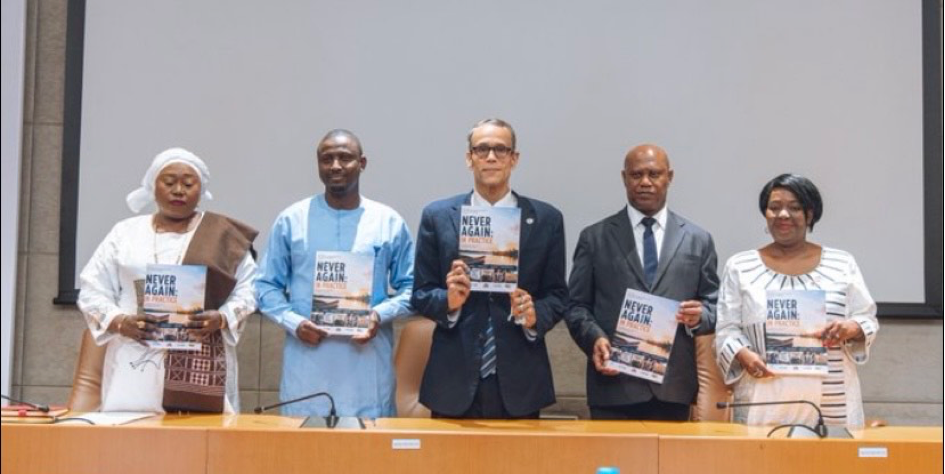
The Government of The Gambia, in partnership with the United Nations, on Monday launched the national Peacebuilding Impact Spotlight Report, Never Again in Practice, and premiered the documentary Road to Kaira as part of Peacebuilding Week.
The event, held at the OIC Conference Centre, convened government officials, development partners, civil society organisations, and youth groups to assess progress and reaffirm commitment to sustaining peace.
The week-long programme highlights gains in social cohesion, democratic governance, and transitional justice, while recognising the role of institutions, communities, and partners in advancing these efforts.
The documentary, hosted by the Office of the UN Resident Coordinator, draws from the spotlight report and captures community experiences, underscoring resilience and ongoing efforts to build lasting peace.
Officials stressed that Peacebuilding Week is not merely reflective but a platform to reinforce national commitment to inclusive and sustainable peace, with particular emphasis on the participation of women and youth.
They noted that peacebuilding in The Gambia is an ongoing process anchored in trust-building, institutional strengthening, inclusive dialogue, and equitable development.
UN Resident Coordinator Karl-Fredrik Paul said the report provides a candid assessment of progress, lessons learned, and remaining gaps in implementing the recommendations of the Truth, Reconciliation and Reparations Commission (TRRC).
“Peacebuilding is not a one-off intervention. It requires sustained efforts to rebuild trust, strengthen accountability, and ensure past injustices are neither forgotten nor repeated,” he stated.
He added that Road to Kaira amplifies the voices of those directly impacted, reinforcing the need for inclusive and collective action in securing lasting peace.
Paul reaffirmed the UN’s commitment, citing a USD 2.5 million Peacebuilding Fund (PBF) allocation to support public accountability and civic space, an additional USD 2.5 million for the Special Accountability Mechanism, and a proposed USD 5 million allocation for 2027 to advance national peacebuilding priorities.
“The Gambia’s experience shows that peacebuilding is most effective when it is nationally led, locally owned, and backed by strong partnerships,” he added.
In a statement delivered on his behalf, Justice Minister Dawda Jallow said one of the report’s key findings is that truth alone is insufficient.
“Truth may open the door, but it cannot on its own heal wounds, reform institutions, deliver reparations, or rebuild public trust,” he said, stressing that meaningful peace requires concrete action.
UNDP Country Representative Mandisa Mashalogu said the report underscores that transitional justice must be integrated with governance, rule of law, service delivery, and economic opportunity.
“Sustainable peace ultimately depends on the relationship between citizens and the state. Our support is focused on strengthening institutions that deliver results, protect rights, and respond to citizens’ needs,” she said.
The launch reinforces The Gambia’s continued partnership with the United Nations in advancing reconciliation, accountability, and democratic consolidation.