


By Olimatou Coker
The Diversifying Gambia Diets for Health and Environmental Sustainability (DIGEST) Project has concluded its two-year pilot phase, with stakeholders expressing strong optimism about scaling up the initiative nationwide.
The project, implemented through a partnership between the Medical Research Council Unit The Gambia at the London School of Hygiene and Tropical Medicine (MRCG at LSHTM) and the National Nutrition Agency (NaNA), focuses on strengthening climate-resilient agriculture while promoting improved dietary practices.
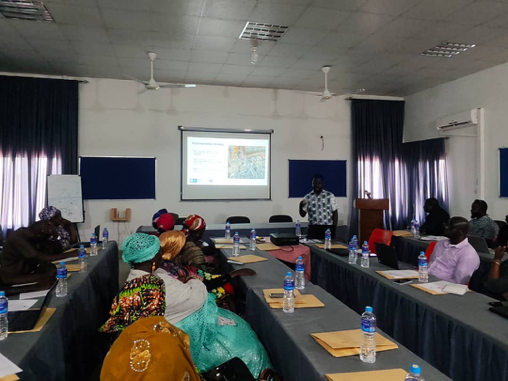
The close-out dissemination meeting, held at the NaNA Conference Hall in Kanifing on Wednesday, brought together key stakeholders to review findings and chart the way forward.
Speaking at the event, NaNA Director General Malang N Fofana said the initiative was designed not only to increase food production but to improve nutrition outcomes through sustainable, community-driven approaches.
“We set out to test whether this model would work, whether it would deliver impact, and whether communities could sustain it beyond the project cycle. The results we are witnessing today reflect two years of intensive collaboration,” he stated.
Fofana emphasised that dietary diversity remains central to improving public health, noting that many households still struggle to access nutritious food.
“You are what you eat. What people consume directly affects their health and wellbeing. This project supports the production of crops that enable households to diversify their diets,” he added.
He further highlighted the economic barriers to proper nutrition, revealing that while an energy-sufficient diet for a household of eight costs approximately D207 per day, a nutritious and diversified diet requires about D373 daily.
“This gap underscores the need for interventions like DIGEST that promote both affordability and accessibility of nutritious foods,” he said.
Sustainability, he stressed, has been a core pillar of the project from inception.
“Implementing a project is one thing; sustaining it is another. That is why we engaged communities and stakeholders from the outset to build ownership and long-term continuity, particularly within the community gardens,” Fofana explained.
Dr Zakari Ali, Research Fellow at MRCG at LSHTM, said the project was grounded in understanding farmers’ lived experiences with climate change and identifying practical, scalable solutions.
“This initiative integrates agricultural resilience with behaviour change. NaNA led efforts to promote healthier dietary practices alongside improved food production,” he noted.
He described the pilot as a foundation for broader national expansion.
“This is not the end; it is the beginning. The project was implemented in four community gardens, and the ambition is to expand it across The Gambia,” he said.
NaNA Deputy Director General Abdou Aziz Ceesay reinforced the importance of stakeholder engagement in sustaining development interventions.
“Critical stakeholders must be involved from day one. Our engagement with communities has been extensive, and today’s engagement allows us to reflect on achievements and strengthen partnerships for future scale-up,” he said.
The DIGEST Project is expected to inform national strategies aimed at addressing nutrition challenges while enhancing resilience to climate change across The Gambia.