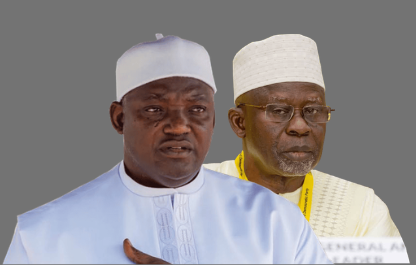
Every Gambian has the constitutional right to express an opinion. Mr Jawo is no exception. Indeed, he remains one of the country’s respected journalists and public intellectuals. His contribution to the struggle for democracy, particularly during difficult periods under the former regime, deserves acknowledgement. However, respect for an individual should never prevent us from questioning the substance of an argument.
The central question is remarkably simple: Should campaign promises supersede the Constitution of the Republic of The Gambia?
My answer is an unequivocal NO.
The Constitution is the supreme law of our Republic. It is not an election manifesto. It is not a coalition agreement. It is not a political declaration made during an emotionally charged campaign. It derives its authority from the sovereign will of the people through constitutional processes, not from speeches delivered on political platforms.
President Adama Barrow indeed campaigned under Coalition 2016 on a promise widely understood to envisage a three-year transitional administration, followed by constitutional reforms and the introduction of presidential term limits. There is no denying that this promise formed part of the Coalition’s political messaging.
Yet there is an equally undeniable constitutional reality.
The Constitution then in force provided for a five-year presidential term. It imposed no legal obligation requiring a president to resign after three years. At the time, it also contained no presidential term limits, making The Gambia one of the very few countries in West Africa without constitutional restrictions on the number of terms a president could serve.
That distinction matters enormously.
Politics concerns expectations.
Law concerns obligations.
Breaking a campaign promise may carry political consequences. It may disappoint supporters. It may influence future elections. It may even shape a politician’s legacy.
But disappointment does not automatically become illegality.
There is an important difference between saying, “He failed to keep his political word,” and saying, “He violated the Constitution.”
These are entirely different propositions.
Too often, our political discourse deliberately blurs that distinction.
Ironically, many of those who today insist that campaign promises should override constitutional provisions are often the same voices that insist upon constitutional supremacy whenever it suits their political arguments. Constitutionalism cannot be selective. Either we believe in the supremacy of the Constitution, or we do not.
Mr Jawo also spoke from the vantage point of someone who served in the Barrow administration. That history deserves reflection.
He was not merely an outside observer or political commentator. He was entrusted with public office. He sat around the Cabinet table where national decisions were debated. He had the opportunity to shape policy, influence governance and contribute to institutional reforms.
If constitutional deficiencies existed and many Gambians agree they did Cabinet was precisely the place to advocate meaningful reform.
It is therefore fair to ask: What concrete constitutional solutions did Cabinet collectively advance while he served?
This is not a personal attack.
It is a legitimate question about collective responsibility.
Leadership is easiest in retrospect.
Governance is much harder in real time.
One should also remember that President Barrow appointed many individuals from different political traditions, including people who had themselves endured difficult experiences during the previous administration. Mr Jawo was among those afforded an opportunity to contribute to rebuilding democratic institutions.
That contribution should not now be forgotten.
Equally important is the assertion that Ecowas somehow judged President Barrow primarily based on the Coalition’s three-year promise.
Such a conclusion deserves scrutiny.
Ecowas has developed extensive protocols promoting constitutional order, democratic governance, credible elections and the rejection of unconstitutional changes of government. The organisation has intervened diplomatically in numerous political crises across West Africa, including unconstitutional military takeovers and electoral disputes.
However, Ecowas does not function as an institution that enforces campaign promises made by political candidates.
Its concern is constitutional legitimacy.
Its concern is democratic stability.
Its concern is regional peace and security.
There is an enormous legal difference between violating a constitution and disappointing political supporters.
Confusing those two concepts weakens serious constitutional debate.
Some commentators also misunderstand how leadership within Ecowas itself is determined.
The Chairmanship of the Authority of Heads of State and Government rotate among member states according to consultations and consensus reached by the leaders themselves. It is neither a lifetime entitlement nor a moral reward bestowed upon governments perceived to have fulfilled campaign pledges.
Similarly, the President of the Ecowas Commission is appointed through procedures agreed upon by member states, considering regional balance, competence and political consensus.
To suggest that these positions are determined primarily by whether a leader fulfilled domestic campaign promises oversimplifies a far more complex regional process.
West Africa has witnessed numerous rotating Ecowas Chairs over the decades. Countries including Nigeria, Ghana, Senegal, Sierra Leone, Liberia, Côte d’Ivoire, Guinea-Bissau, Benin and others have all assumed leadership responsibilities at different times according to regional arrangements.
Holding the Chair carries substantial responsibilities.
The Chair becomes one of the principal diplomatic voices of the region.
The office demands extensive travel.
It requires mediation in regional disputes.
It involves emergency summits.
It entails representing Ecowas before international partners including the African Union, the United Nations and major development institutions.
These responsibilities inevitably impose financial obligations upon the host government through diplomacy, protocol, logistics and state administration.
It is therefore neither a ceremonial trophy nor a political consolation prize.
It is a demanding regional responsibility.
That is precisely why discussions surrounding Ecowas leadership should be grounded in institutional realities rather than political speculation.
None of this suggests that governments should be immune from criticism. Far from it.
Democracy depends upon criticism.
Governments should be questioned.
Policies should be scrutinized.
Campaign promises should be remembered.
Public officials should be held accountable.
But accountability itself must also respect constitutional principles.
Otherwise, we replace objective standards with partisan preferences.
The Gambia today faces challenges far greater than relitigating Coalition 2016.
Youth unemployment remains high.
The cost of living affects virtually every household.
Agricultural productivity requires renewed investment.
Health services still demand improvement.
Education must become more competitive.
Infrastructure continues to require expansion.
Private sector growth remains essential.
These are the debates that should dominate our national conversation.
Political nostalgia cannot become our national development strategy.
Mr Jawo’s contributions to journalism and democratic advocacy remain part of our national history.
They deserve recognition.
Yet statesmanship also requires balance.
It requires acknowledging both successes and shortcomings.
No administration is perfect.
No president gets every decision right.
The Barrow administration has faced legitimate criticism on constitutional reform, governance and public expectations.
At the same time, it has overseen significant infrastructure development, expanded road networks, increased electricity access in many communities, strengthened diplomatic relations, maintained constitutional civilian governance and presided over multiple competitive elections in an environment of considerably greater political freedom than existed prior to 2017.
A balanced assessment requires recognizing both realities simultaneously.
Patriotism demands honesty.
Honesty requires consistency.
Consistency means applying the same constitutional principles regardless of which political party benefits.
We cannot celebrate constitutional supremacy one day and reject it the next because political circumstances have changed.
If tomorrow another president made ambitious campaign promises that later proved difficult to implement, should the Constitution automatically give way to campaign speeches?
Certainly not.
The law cannot bend according to political convenience.
If Gambians desire presidential term limits and many do the appropriate path remains constitutional reform through lawful democratic processes.
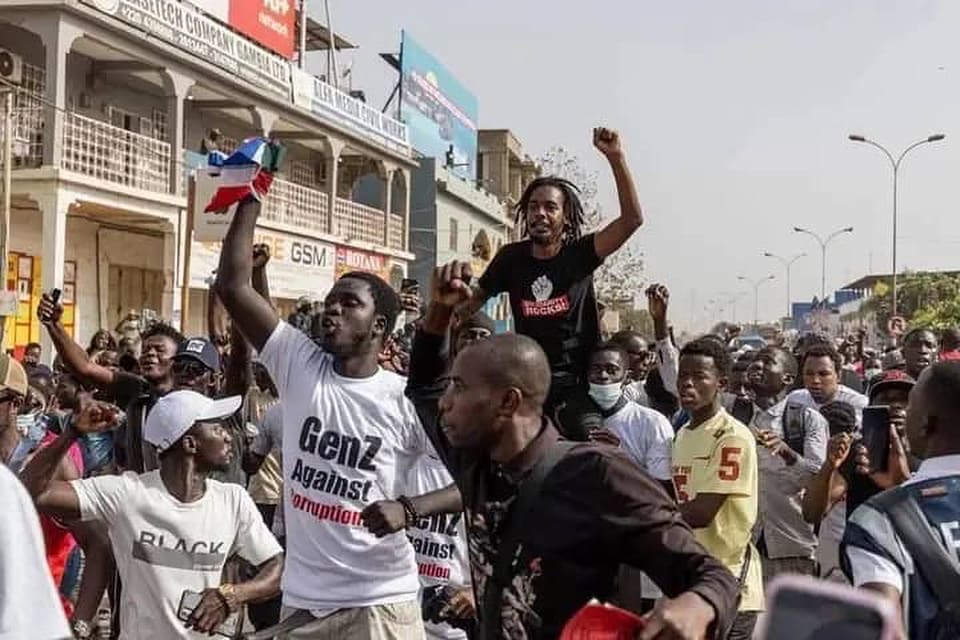
Not political intimidation.
Not emotional slogans.
Not historical revisionism.
Constitutions evolve through legislation, national consensus and lawful amendment not through retrospective reinterpretation of campaign speeches.
Perhaps that is why, if I were Information Dr. Ismaila Ceesay, I might have declined to be drawn into speculative political arguments during such an interview. Sometimes restraint better serves constitutional integrity than partisan exchanges.
Our democracy has matured considerably since 2016.
That maturity should now be reflected in the quality of our public discourse.
We should criticize where criticism is deserved.
We should praise where progress has been made.
We should demand accountability from every government.
Above all, we should defend the supremacy of constitutional law over political nostalgia.
The future of The Gambia will not be secured by endlessly revisiting old campaign slogans.
It will be secured by building stronger institutions.
By strengthening the rule of law.
By respecting constitutional order.
By encouraging productive political debate rooted in facts rather than sentiment.
Ultimately, governments come and go.
Political parties rise and fall.
Campaign promises to inspire, disappoint and eventually fade into history.
But constitutions endure.
That is why the Constitution does not campaign promises that must remain the final arbiter of political legitimacy.
If we truly seek a stronger democratic Republic, then let us debate vigorously, disagree respectfully, hold leaders accountable relentlessly, but never abandon the constitutional principles that protect every Gambian regardless of political affiliation.
The Republic of the Gambia deserves nothing less.