

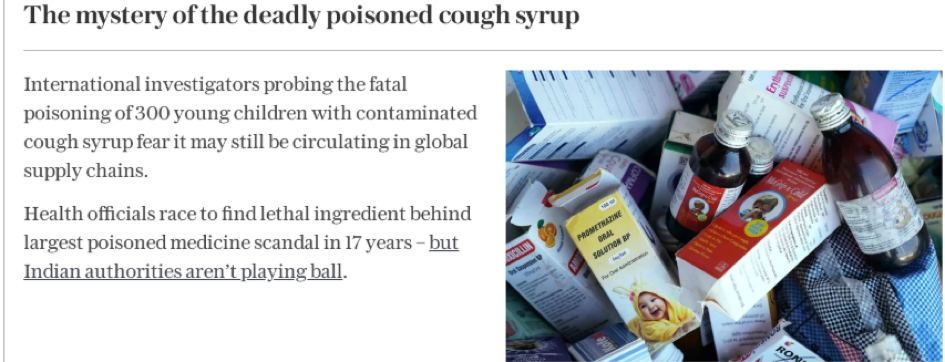
Indian police have opened a manslaughter investigation into the deaths of at least 14 children linked to a contaminated cough syrup, in the latest scandal to dent the country’s image as a pharmaceutical powerhouse.
Samples of an Indian-made medicine called Coldrif Syrup allegedly contained up to 500 times the permissible limit of a toxin called diethylene glycol and most of the victims reportedly died of kidney failure after taking it.
“All the children had early symptoms of common cold, flu or fever, and most were under the age of five years,” according to the police complaint filed in the central state of Madhya Pradesh, Reuters reported.
“Most of them were given Coldrif syrup, following which they suffered from urine retention and acute kidney disorder.”
The incidents are only the latest tragedies in recent years to be caused by common cough syrups being contaminated with deadly industrial solvents.
In previous incidents, medicines have become contaminated when propylene glycol, a harmless compound used to dissolve active ingredients, is replaced or mixed with either diethylene glycol (DEG) or ethylene glycol.
The toxic solvents have similar chemical properties and can be introduced accidentally in the supply chain, or even by deliberate adulteration because they are cheaper than propylene glycol.
DEG or ethylene glycol toxins were found in Indian-made cough syrups that have allegedly killed at least 141 children in Gambia, Uzbekistan and Cameroon since 2022, and another 12 children in India in 2019.
DEG is used in products from anti-freeze to cosmetics and lubricants and can prove fatal in humans.
Symptoms include abdominal pain, vomiting, diarrhoea, inability to pass urine, headaches, altered mental state, and acute kidney injury which may lead to death.
Police have named the Coldrif manufacturer, a Chennai-based company called Sresan Pharma in the state of Tamil Nadu, as one of the main accused.
Sresan Pharma did not respond to a Reuters request for comment.
The syrup is reported to have only been available in India.
A doctor who prescribed the medicine to most of the children has also been arrested.
Contamination scandals
Authorities in Tamil Nadu found the syrup contained 48.6 per cent DEG, while tests in Madhya Pradesh showed 46.3 per cent. The permissible limit set by Indian authorities and the WHO is 0.1 per cent.
The company could face charges of culpable homicide not amounting to murder, adulteration of drugs, and manufacturing, selling, or distributing cosmetics in violation of the Drugs and Cosmetics Act, according to the complaint. If convicted, the company and its officials could face fines and jail terms of up to life.
India’s burgeoning $50bn pharmaceutical industry is third only to competitors in America and China.
The nation’s low manufacturing costs have made it a global export power.
India supplies two-fifths of generic medicines used in the United States, a quarter of all those used in Britain, and more than 90 per cent of all medicines in many African nations, according to health authorities.
Contamination scandals have dented its image however.
After the deaths in Uzbekistan, Gambia and Cameroon, World Health Organisation officials complained India was putting the country’s commercial interests above patient safety by withholding vital information from investigators trying to track down potentially deadly batches.
However since then the country is understood to have greatly increased both its cooperation and surveillance.
Since 2023 and following the overseas deaths, India made it mandatory for syrups to be tested at government-approved labs before export. The same rule does not apply to locally sold products.