


By Olimatou Coker
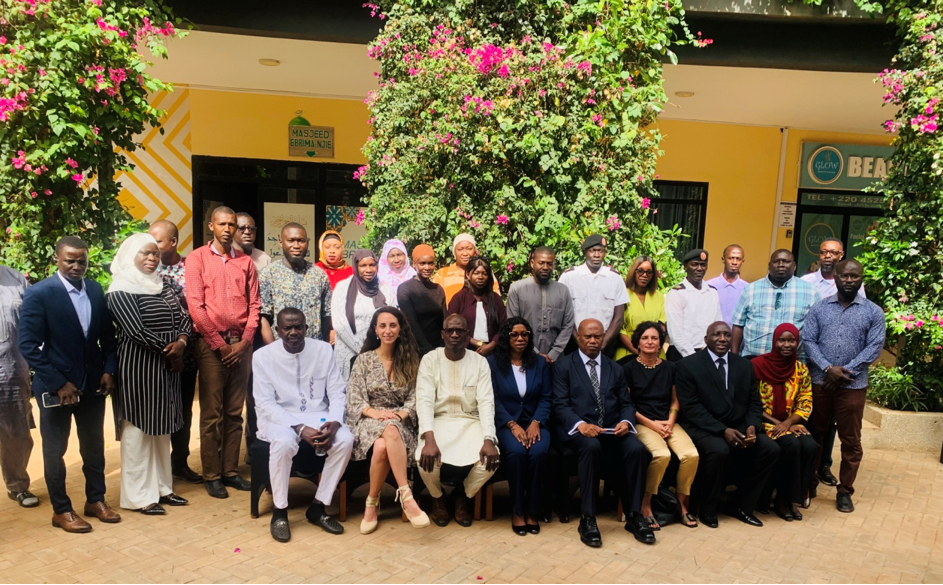
The Attorney General’s Chambers and Ministry of Justice, through the Registrar General’s Department, on Monday launched a two-day awareness and capacity-building workshop on innovation, intellectual property (IP) and occupational health and safety (OHS) at Bakadaji Hotel. The training brings together stakeholders to deepen understanding of IP rights, innovation, and safe workplace practices.
Organised by the World Intellectual Property Organization (WIPO) in collaboration with the Gambia Industrial Property Office (GIPO), the workshop is designed to strengthen participants’ knowledge of intellectual property systems and promote the effective use of IP as a driver of innovation, economic growth and sustainable development. It also seeks to reinforce awareness of occupational health and safety standards.
George Ghandour, Director of the Division for Arab Countries at WIPO, said workplace safety is now a global development priority, warning that millions of workers continue to die or suffer injuries and occupational diseases each year from preventable hazards. He said protecting workers must go beyond reacting to accidents and should focus on predicting risks, detecting hazards in real time, and ensuring access to reliable technologies and quality equipment.
Solicitor General and Legal Secretary Hussain Thomasi said the workshop represents a strategic moment for The Gambia as the country deepens its commitment to innovation, strengthens workplace safety, and positions intellectual property as a tool for national development. He said the initiative will support the adoption of modern safety technologies in key sectors, back local innovators, and help ensure Gambian inventions are protected, commercialised and scaled.
Registrar General Abdoulie Colley said workplace safety is not only a labour issue but also a development issue, stressing that every accident prevented and every safer process adopted contributes to productivity, competitiveness and human dignity. He said IP systems can support the creation and commercialisation of safer technologies, including improved machinery, protective equipment, digital monitoring tools and safer production processes.
In her presentation, WIPO Fellow Marina Nikolakopoulou said the programme is aimed at examining how intellectual property instruments and innovation can help create safer workplaces and reduce occupational accidents and diseases. She said the project started in January 2024 and will run for 36 months, with Tunisia, Cameroon, The Gambia and Iran benefiting from the initiative.