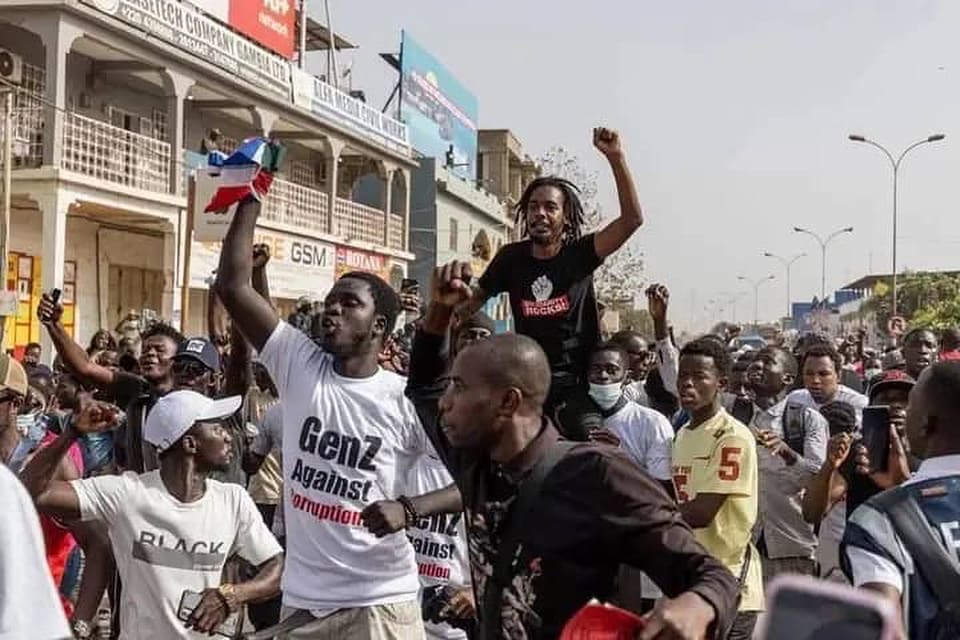
Over the weekend the Ministry of Information issued a statement expressing its “deep concern over the increasing spread of misinformation, deliberate distortions, and politically motivated narratives circulating on social media and certain online platforms” regarding among other things, corruption.
A few days ago, the chief of defence staff of the Gambia Armed Forces, Lt General Momat Cham tendered his resignation, and it was accepted, by President Adama Barrow, after the general’s former aide, who had fallen out with him, did an exposé, alleging serious abuse of office, economic malfeaseance, and nepotism among other things. CDS Cham denied the allegations but eventually, he fell down on his sword, reportedly not to cause further embarrassment to the military and to allow for an independent investigation.
In the wake of the scandal, several whistle blowers have published documents, receipts and memos allegedly showing the rot of corruption in the system. The Gambia Government condemned as “both irresponsible and unfortunate that some individuals and groups have chosen to exploit these temporary challenges to spread falsehoods, undermine public confidence, and score cheap political points rather than contribute constructively to national dialogue and solutions”.
The government said it remains “firmly committed to transparency, accountability, and responsible governance” and that allegations of corruption must never be reduced to social media propaganda, political sensationalism, or coordinated misinformation campaigns aimed solely at scoring cheap political points and creating public distrust. “Matters of governance and public accountability are serious national issues that must be addressed through credible institutions, evidence-based processes, and the rule of law and not through reckless speculation and politically charged disinformation,” it averred.
Since the early years of this administration, it has been given a lot of flak for not doing enough about corruption. After the decadent score of years of Yahya Jammeh, what Gambians want in the New Gambia promised in 2017 is a country where the common wealth is not personalised and public resources are treated as private property.
Transparency International’s Corruption Perceptions Index consistently ranks most of our countries below the global average. But the numbers only capture part of the damage. When a road contract is inflated, the cost is not just the overpaid millions. It is the potholes that remain, the transport costs that stay high, and the businesses that cannot reach markets. When a medical post is stocked through bribery, the cost is not just the missing drugs. It is the mother in Basse who travels 50km for medicine that should be in her village clinic.
Research from the African Union and Uneca estimates that Africa loses over US$148 billion annually to corruption and illicit financial flows. That figure exceeds total foreign aid to the continent. It is money that could fund schools, power plants, and hospitals. Corruption also distorts who gets ahead. Instead of merit and innovation, connections and bribes determine contracts, jobs, and justice. Over time, that erodes faith in the state itself.
Our recent history makes corruption a uniquely sensitive issue. Under the Jammeh regime, state resources were merged with personal accounts. The Janneh Commission later documented how public assets, cash, and land were diverted. That legacy left institutions hollow and public trust fractured. Since 2017, the Barrow administration has opened space for audits, commissions, and press freedom that were absent before. The Public Procurement Act, the Asset Declaration law, and reforms at Nawec and the Gambia Ports Authority show intent to tighten rules. Yet the transition is incomplete. Audit reports still reveal unaccounted funds in ministries and agencies. Citizens still report paying “facilitation fees” for basic services like business registration, land documentation, and police matters. Petty corruption at service points and grand corruption in contracts remain parallel problems.
The scale is smaller than in larger economies, but the impact is sharper. The Gambia’s budget is small. Every dalasi lost to graft is a dalasi not spent on teachers, nurses, or stable electricity. For a country trying to attract investment and retain youth, perceptions of corruption matter as much as reality. Investors ask: Will my license be delayed unless I pay? Will contracts be awarded on merit?
Fighting corruption requires more than speeches. It requires systems that make theft difficult and honesty rewarding. First, enforce transparency. Publish government contracts, budgets, and audit findings in formats citizens can read. When people see how money is spent, officials think twice before diverting it. Second, protect accountability institutions. Get the Anti-Corruption Commission fully empanelled and up and running. Don’t interfere with the work at the National Audit Office and the judiciary. Cases must end in court, not just in reports. Third, reduce human discretion where bribes thrive. Digitalise land registries, business registration, and tax payments. Automate processes. Fewer face-to-face transactions mean fewer opportunities for “under the table” deals. This is why Yankuba Darboe and his team at the Gambia Revenue Authority are setting record collections year after year. Fourth, involve citizens. Corruption survives in silence. Community monitoring of local projects, whistleblower protection, and investigative journalism as is being done by The Republic and What’s On Gambia create pressure from below.
Taking the right actions, we can turn things around. Botswana, Rwanda, and Mauritius show that strong rules and political will can shift outcomes. The Gambia has already broken from a past where theft was state policy. The next step is to build a system where theft is simply bad business. Ending corruption will not solve every problem. But it will ensure that the resources The Gambia already has actually reach the classroom, the clinic, and the grid.