

By Fatou Gassama
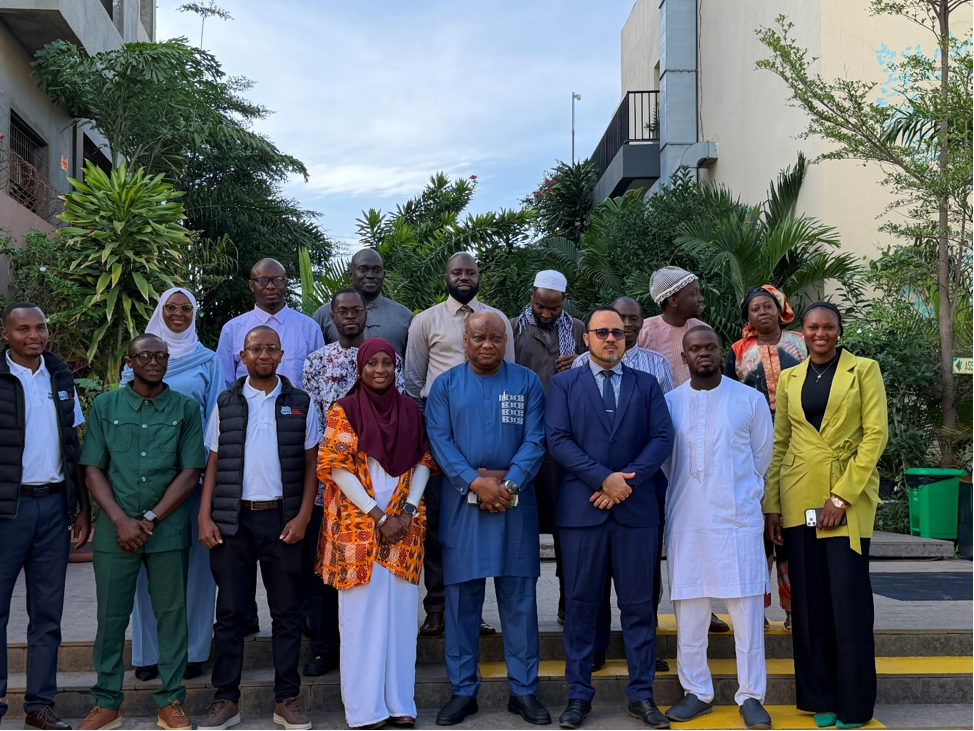
A two-week Certified Results-Based Monitoring and Evaluation (RBM), ICT Sector Data Analytics, Dashboard Reporting, Implementation Diagnostics, and Adaptive Project Management training programme opened recently. The course brings together professionals from government, development partners, the private sector, and civil society to strengthen capacity in results-based management, data-driven decision-making, and effective project implementation.
The training will equip participants with practical skills in monitoring and evaluation, ICT-enabled data analytics, performance dashboard reporting, and adaptive project management to improve planning, implementation, and delivery of development programmes.
At the opening ceremony, speakers emphasised the need to strengthen institutional capacity for RBM, digital transformation, and data-driven governance. Participants were urged to use the training to upgrade technical skills, exchange best practices, and adopt innovative approaches to planning, implementation, monitoring, evaluation, and reporting.
Serign Omar Lowe, project coordinator, said the Western Africa Regional Digital Integration Programme (WADIP) is a $50 million World Bank grant to the Gambia. A key objective of WADIP is to expand broadband access and usage. He said the programme is preparing to sign a contract within months to bring a submarine cable to the country, which will significantly improve internet connectivity.
Lowe stressed the workshop’s role in improving sector data collection and reporting so stakeholders can measure the submarine cable’s impact once it is installed. He said WADIP aims to improve the internet landscape and contribute to a single digital market in Africa, aligned with the AU Agenda 2030.
Participants will develop dashboards during the course and are expected to update them regularly as new data becomes available. Lowe said those dashboards will support better decision-making and increase programme impact.
Lead trainer John Kihw Chore said the training will be interactive and practical, teaching participants how to translate raw data into actionable insights. He emphasised the importance of collecting high-quality data and addressing gaps where data quality is weak.
In the keynote address, PS Assan M Jallow described the programme as an investment in people and institutions that will deliver measurable digital transformation outcomes for the Gambia. He called on participants to prioritize effective implementation, reliable data, continuous learning, and evidence-based decision-making, and he thanked WADIP and the World Bank for their support.
Jallow noted that digital transformation goes beyond technology: it delivers better services, stronger governance, and broader opportunities for citizens, businesses, and public institutions. He argued that success should be measured by the improvements in people’s lives and institutional strength—not by systems deployed or projects completed.
Highlighting the Gambia’s recent gains, Jallow pointed to strong performance in the International Telecommunication Union’s 2026 ICT Development Index and steady growth in mobile and broadband access. He added that this progress must be sustained through continuous monitoring, data analysis, and early response to challenges—the core value of results-based monitoring and evaluation.
He urged participants to take full advantage of the training, apply what they learn, and help build a digital Gambia where evidence informs policy, innovation improves services, performance guides investment, and results define success.